Types of Alarms
When searching for an alarm system for your home, you are offered many items and hardware to enhance the system. It's a good idea to be familiarized with what each one does and how they work. Here we provide a list of the most common accessories that come with a home alarm system.
Control Panel
The "heart" of your home security system, the Control Panel communicates with all the various detectors and devices located throughout your home and is programmed to react in specific ways to each security device. For example, a monitored smoke detector is active 24 hours a day whether your system is armed or not. When triggered, our Central Station receives its signal and we dispatch the Fire Department to your home. Other detectors, like window contacts, only report an alarm when the system is armed and intrusion is detected.
In all cases, alerting devices, such as sirens or keypad sounders, are activated by your control panel to inform you of an emergency. It can even communicate trouble with your system, such as a low battery and relay this information to the Monitoring Station so you are assured your home System is always working properly.
Keypad
The keypad, which is usually located near the main entrance to your home, is the main interface between you and your home alarm system. Set the system to page you in an emergency... turn your system on or off with a touch of your wireless keyfob... or press the status button to get a report that shows your system is working properly. In an emergency, panic buttons located on your touchpad can immediately summon the proper authorities... sirens sound and help is on the way.
Door and Window Sensors
Door and Window Sensors are nearly invisible, extremely reliable, and a must for securing entry points to your home and nearly anything else that opens and closes within. Windows, doors, cabinets, closets, art cases, and gun safes are all commonly found uses for these devises. Your alarm system is activated when there is unauthorized entry to these areas.
Motion Sensors
In cases where individuals choose not to protect every opening in their home, motion detectors can protect large open areas with a single device.
The most commonly used motion sensor is a Passive Infrared Detector (PIR). This sensor detects the body heat and movement of an intruder, which in turn sends a signal to the control panel, activates sirens and communicates an alarm with our Central Station. Special motion sensors can be installed which can even distinguish your pets from burglars.
Glass Break Detectors
Breaking glass can be the sound of a burglar entering your home. Glass Break Detectors "listen" for the sound frequency of shattering glass and can provide protection for windows within an area up to 35 feet from the sensor. Would-be burglars can now be detected before physically entering your home.
Smoke Detector
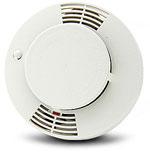 Where there is smoke, there is fire. Smoke detectors are very important for your home, and help protect you by alerting you about a possible fire in your home.
It is a known fact that in a house fire you have about 2 minutes after your smoke detector alerts you to the fact that there is a fire, to get yourself and your family out of the house safely. Based on this fact, this is probably one of the most important issues we will discuss today.
ADT Monitored smoke detectors make sure that in case of a fire, all you need to do is evacuate. ADT will call the fire and police department for you. That bakup may be the difference between life and death.
Heat Detectors
Thermal or heat detectors are another valuable way of alerting those in your home of the danger of fire. Heat detectors do not replace smoke detectors, nor do smoke detectors replace heat detectors. Heat detectors are equipped with sensors to perform two tasks.
- Detects a sudden change in temperature.
- Detects rise in temperature above a fixed degree.
Most heat detectors are set to sound when the temperature rises 15° F (8° C) per minute. They also signal when the room's temperature rises above 135° F (57° C) or 200° F (94° C). These two tasks provide an early warning system for most fires since a fire will rapidly increase to over 900° F.
CO Detector
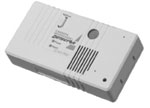 Carbon monoxide is invisible and odorless and causes symptoms such as fatigue, nausea, headache and dizziness that may be confused with flu or other sicknesses.
Unlike fire and burglary, carbon monoxide can be an invisible, almost undetectable threat to your family and home. If you live in a home with gas logs, hot tub, or other gas-enabled appliances or have an attached garage you need to be aware of this threat.
Water Sensor
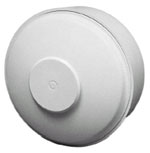 While the name makes it's use quite obvious, it may not be immediately clear what a water sensor is for. The typical water sensor is designed to alert you of flooding, something particularly useful if you live in low areas close to rivers or lakes.
Water is a source of concern to every homeowner. There is always a threat of flooding and leaking water. In order to react to this threat and prevent a lot of damage, a homeowner needs to be alerted immediately. As a homeowner, you need to consider how to protect your home against water damage. Leaking pipes or hoses, overflowing sinks and toilets, and clogged drains can quickly cause significant damage to your house in a small amount of time. You want to be able to stop the water as soon as possible to prevent a great amount of damage.
Sirens
Sirens are more than an alerting device. They are also a very effective deterrent to crime. Once activated, intruders know it's only a matter of minutes until the police arrive.
To insure your family is alerted to an emergency, an Inside Siren is part of every system. Many homeowners also choose to include outside sirens to alert neighbors to an emergency. Outside Sirens are available with tamper guards, which cause the Siren to sound if someone tries to remove it from its mount. Sirens are a part of every Home security system.